
Keywords
synchronization
trance
How to Cite
Article History
Abstract
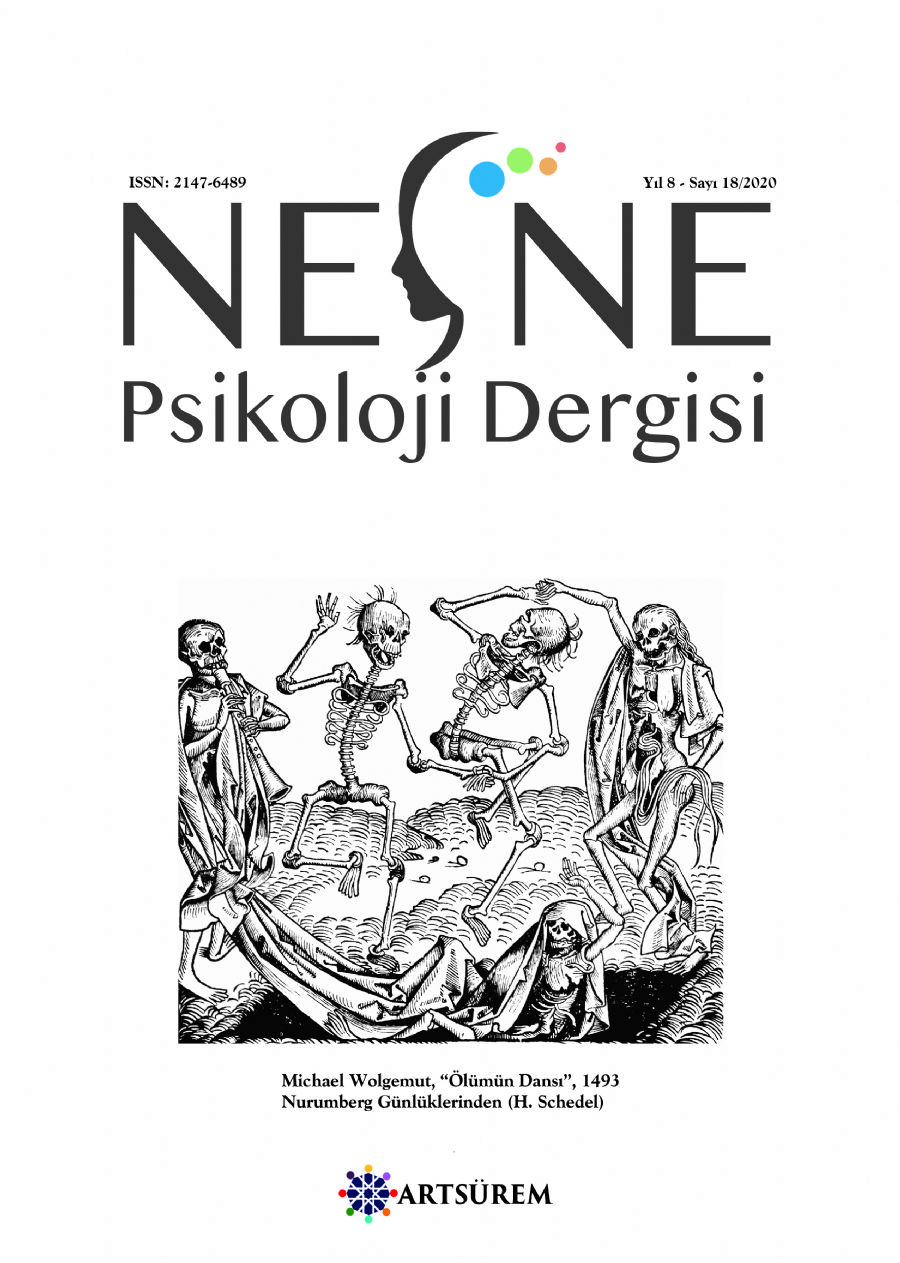
Synchronization to music is a basic ability for humans and the key component of synchronization is to entrain a particular rhythm. EEG studies show that when we synchronize with a rhythm, our brain waves also synchronize. From this view, trance can be a state of consciousness that is a result of rhythmic entrainment of brain waves. It is known that Shamans perform a ceremony with drums and experience trance for centuries. Although using rhythm to mediate trance goes back to Shamanism, it is also a part of different cultures. Trance experience continues its existence with psychedelic trance dance in the West and also with dhikr and Sama in the East world. If we define the term of “trance” as “a state of wajd”, experiences of Shaman rituals, psychedelic dance and dhikr are similar, because of using rhythm as a mediator. In this review, comparison of the trance experiences shows that the psychological effects of rhythmic entrainment point to a fundamental mechanism beyond cultural differences.
Öz
Müzikle senkronize olmak, insanın temel becerilerinden biridir ve senkronizasyonun en önemli öğesi, belirli bir ritme kenetlenmedir. EEG çalışmaları, insan davranışının belirli bir ritim ile senkronize olduğu durumda beyin dalgalarının da senkronize olduğunu göstermektedir. Bu açıdan bakıldığında trans, beyin dalgalarının ritme kenetlenmesi sonucu ortaya çıkan bir bilinç durumu olarak ele alınabilir. Şamanların, yüzyıllar boyunca davul ritmi kullanarak icra ettikleri ritüeller aracılığıyla trans deneyimi yaşadıkları bilinmektedir. Ritmi transa geçmek için araç olarak kullanma geleneği Şamanizme kadar uzanırken, aynı zamanda farklı kültürlerin de parçası olmuştur. Trans deneyimi, Batı’da psikedelik trans dansı ile varlığını sürdürürken, Doğu kültüründe ise zikir ve Sema ayini ile kendine yer bulmuştur. Eğer trans deneyimini, bir tür “vecd” hali olarak tanımlarsak; Şaman ritüelleri, psikedelik dans ve zikir, farklı kültürel bağlamlara rağmen ritmin trans durumuna ulaşmak için aracı olarak kullanılması nedeniyle temel olarak benzerdir. Bu derlemede bahsedilen trans deneyimlerinin birlikte ele alınması ve tartışılması, ritmik kenetlenmenin psikolojik etkilerinin kültürel farklılıkların ötesinde temel bir mekanizmaya işaret ettiğini göstermektedir.
Anahtar Kelimeler: Ritmik kenetlenme, senkronizasyon, trans
References
Adrian, E. D. ve Matthews, B. H. C. (1934). The Berger rhythm: potential changes from the occipitallobes in man. Brain, 57, 355-384.
Aittoniemi, T. (2012). Cultural and musical dimensions of Goa trance and early psychedelic trance in Finland. Yayınlanmamış yüksek lisans tezi, Helsinki University. Helsinki, Finlandiya.
Basso, R. (2006). Music, possession and shamanism among Khond tribes. Culture and Religion, 7 (2), 177- 197.
Becker, J. (1994). Music and Trance, Leonardo Music Journal, 4, 41-51.
Ben-Pazi, H., Shalev, R. S., Gross-Tsur, V. ve Bergman, H. (2006). Age and medication effects on rhythmic responses in ADHD: possible oscillatory mechanisms? Neuropsychologia, 44 (3), 412-416.
Bernieri, F. J., Reznick, S. ve Rosenthal, R. (1988). Synchrony, pseudosynchrony, and dissynchrony: measuring the entrainment process in mother-infant interactions. Journal of Personality and Social Psychology, 54 (2), 243-253.
Clayton, M., Sager, R. ve Will, U. (2005). In time with the music: the concept of entrainment and its significance for ethnomusicology. European Meetings in Ethnomusicology, 11, 3-142.
Dobkin de Rios, M. ve Katz, F. (1975). Some relationships between music and hallucinogenic ritual: the jungle gym in consciousness. Ethos, 3(1), 64-76.
Douglas-Klotz, N. (2002). The key in the dark: self and soul transformation in the Sufi tradition. İçinde S.G. Mijares (Ed.), Modern psychology and ancient wisdom: an anthology of healing practices from the world’s religious traditions. New York: Haworth Press.
Eerola, T., Luck, G. ve Toiviainen, P. (2006). An investigation of pre-schooler’s corporeal synchronization with music. İçinde M. Baroni, A.R. Addessi, R. Caterina, M. Costa (Ed.), Proceedings of the 9th International Conference on Music Perception and Cognition (ICMPC9) (472-476). Alma Mater Studiorum University of Bologna, Bologna, İtalya.
Ehrenreich, B. (2007). Dancing in the streets: a history of collective joy. New York: Metropolitan (First Hold Paperback Edition).
Eitan, Z. (2002). Meaning, motion and gesture in psychedelic trance music. Yayınlanmamış seminer, Tel Aviv University. Tel Aviv, İsrail.
Ellingson-Waugh, T. (1974). Musical flight in Tibet. Asian Music, 5(2), 3-44.
Fachner, J. C. (2002). Topographic EEG changes accompanying cannabis-induced alteration of music perception: cannabis as a hearing aid? Journal of Cannabis Therapeutics, 2 (2), 3-35.
Fachner, J. C. (2011). Time is the key: music and altered states of consciousness. İçinde E. Cardena, M. Winkelman (Ed.), Altering Consciousness: Multidisciplinary Perspectives. Santa Barbara: Praeger.
Fujioka, T., Trainor, L. J., Large, E. W. ve Ross, B. (2012). Internalized timing of isochronous sounds is represented in neuromagnetic beta oscillations. The Journal of Neuroscience, 1, 1791-1802.
Gingras, B., Pohler, G. ve Fitch, T. (2014). Exploring Shamanic journeying: Repetitive drumming with Shamanic instructions induces specific subjective experiences but no larger cortisol decrease than instrumental meditation music. Plos One, 9 (7), 1-9.
Herbert, R. (2011). Reconsidering music and trance: cross-cultural differences and cross-disciplinary perspectives. Ethnomusicology Forum, 20 (2), 201-227.
Hove, M. J. ve Risen, J. L. (2009). It’s all in the timing: interpersonal synchrony increases affiliation. Social Cognition, 27(6), 949-961.
Jones, M. R. ve Boltz, M. (1989). Dynamic attending and responses to time. Psychological Review, 96 (3), 459-491.
Kaelen, M., Barrett, F. S., Roseman, L., Lorenz, R., Family, N., Bolstridge, M., Curran, H. V., Feilding, A., Nutt, D. J. ve Carhart-Harris, R. L. (2015). LSD enhances the emotional responses to music. Psychopharmacology, 232(19), 3607-3614.
Katz, F. ve Dobkin de Rios, M. (1971). Hallucinogenic music: an analysis of the role of whistling in Peruvian ayahuasca healing sessions. The Journal of American Folklore, 84(333), 320-327.
Kirkegaard, A. (2012). Music and transcendence: Sufi popular performances in East Africa. The Finnish Society for the Study of Religion. 48(1), 29-48.
Ludwig, A. (1969). Altered states of consciousness. İçinde C. Tart (Ed.), Altered states of consciousness. New York: John Wiley and Sons Inc.
Menaker, M. (2002). Biological clocks at the end of the 20th century. İçinde V. Kumar (Ed.), Biologica rhythms. Berlin: Springer-Verlag.
Menteş, Ü. (2011). Sema Ayini. Semboller ve Anlamlar. İstanbul: Cinius Yayınları.
Neher, A. (1961). Auditory driving observed with scalp electrodes in normal subjects. Electroenceph. Clin. Neurophysiol., 13, 449-451.
Neher, A. (1962). A physiological explanation of unusual behavior in ceremonies involving drums. Human Biology, 34(2), 151-160.
Phillips-Silver, J. ve Trainor, L. J. (2005). Feeling the beat: movement influences infant rhythm perception. Science, 308, 1430.
Rouget, G. (1985). Music and trance: A theory of the relations between music and possession. (Çev. Biebuyck B.). Chicago: The University of Chicago Press. (Özgün çalışma 1980).
Schimmel, A. (1975). Mystical Dimensions of Islam. North Carolina: The University of North Carolina Press.
Simão, E., Malheiro da Silva, A., Tenreiro de Magalhães, S. (2015). Exploring psychedelic trance and electronic dance music in modern culture. USA: IGI Global.
St John, G. P. (2012). Experience, tribalism, and remixology in global psytrance culture. İçinde C. Bender & A. Taves (Ed.), What matters? Ethnographies of value in a not so secular age. New York: Columbia University Press.
Trost, W., Frühholz, S., Schön, D., Labbé, C., Pichon, S., Grandjean, D. ve Vuilleumier, P. (2014). Getting the beat: entrainment of brain activity by musical rhythm and pleasantness. NeuroImage, 103, 55-64.
Turan, N. S. (2016). 17. yüzyılda Osmanlı tasavvuf ritüelinde Semâ, deveran ve müziğin püritanizmle imtihanı. İTÜ Porte Akademik Müzik ve Dans Araştırmaları Dergisi, 13, 60-82.
Valentine, E. ve Evans, C. (2001). The effects of solo singing, choral singing and swimming on mood and physiological indices. British Journal of Medical Psychology, 74, 115-120.
Vicente, V. A. (2007). The aesthetics of motion in musics for the Mevlana Celal Ed-Din Rumi. Yayınlanmamış doktora tezi, University of Maryland. College Park, ABD.
Wiltermuth, S. S. ve Heath, C. (2009). Synchrony and cooperation. Psychological Science, 20, 1-5.
Wylie, L. (1985). Language learning and communication. The French Review, 58 (6), 777-785.

This work is licensed under a Creative Commons Attribution-NonCommercial-NoDerivatives 4.0 International License.
Copyright (c) 2020 Nesne Psikoloji Dergisi