
Anahtar Kelimeler
belirsizliği azaltma ihtiyacı
belirsizlik yönetimi
Türkiye’de belirsizliğin etkileri
Nasıl Atıf Yapılır
Öz
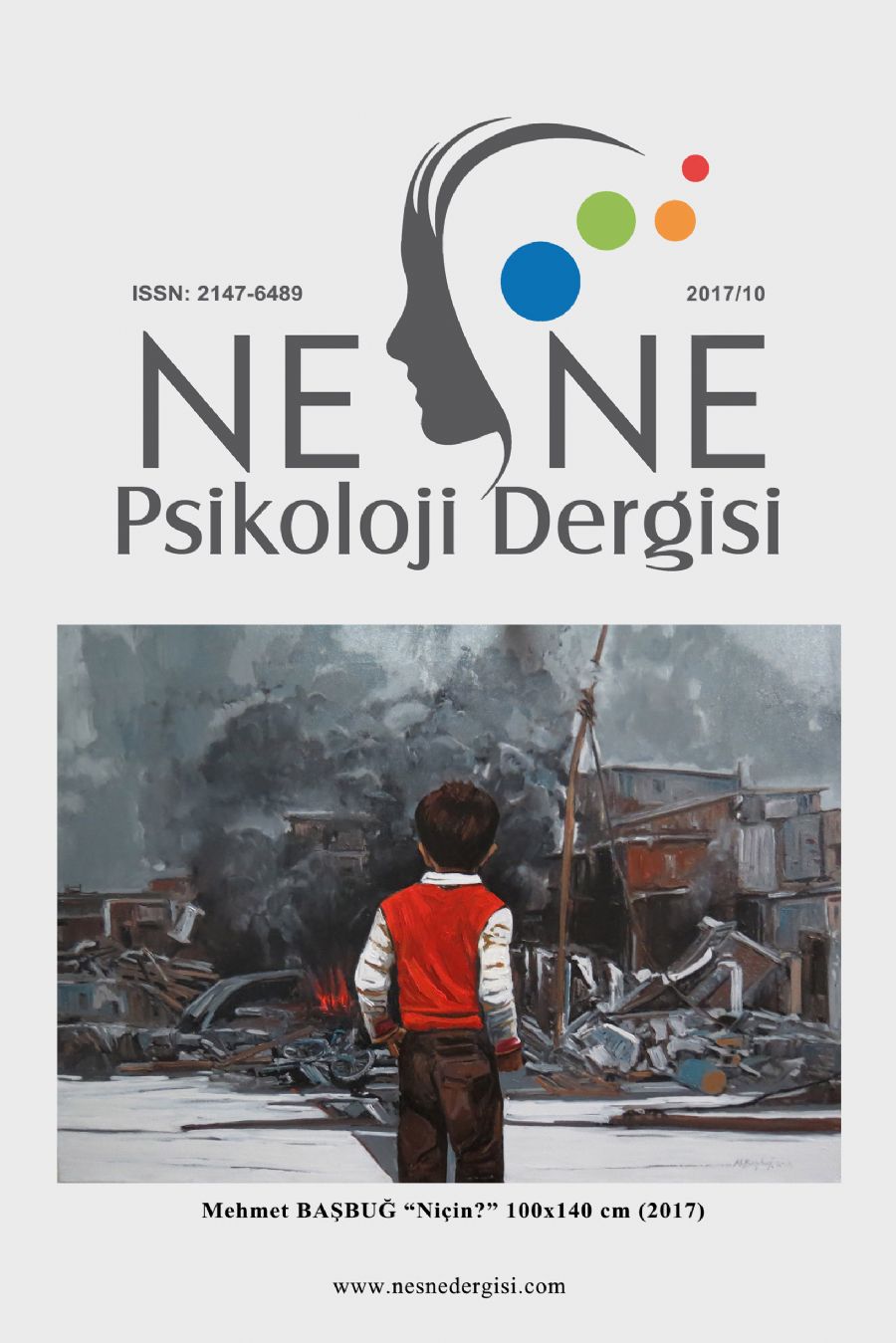
Belirsizlik yazında farklı araştırmacılar tarafından tutarsızlık, öngörememe, tanımlayamama ve şüphe etmek gibi kavramlarla ilişkilendirilmektedir. Belirsizliği azaltma ihtiyacı ise insanların belirliliğe ulaşmak adına, karşılaştıkları belirsizlikleri yönetme eğilimi olarak tanımlamaktadır. Kimi araştırmacılar tarafından temel motivasyon olarak tanımlanan belirsizliği azaltma ihtiyacı günlük hayatta sıkça karşımıza çıkmaktadır. Normal şartlarda günlük yaşam içerisinde yaşanan belirsizliklere bazı durumlarda toplumsal belirsizlikler de eşlik etmektedir. Toplumsal belirsizlikler kültürel olarak belirsizlikle olan ilişkimizi içerdiği gibi yakın zamanda topluluk olarak deneyimlenen belirsizlikleri de içermektedir. Türkiye’nin kültürel bağlamda belirsizliği reddetme eğiliminin oluşu ve son yıllarda Türkiye’de yaşanan terör olayları ve darbe girişimi gibi ülke çapında yaşanan belirsizlikler, konunun ülkemiz üzerindeki etkisini arttırmaktadır. Bu yazıda belirsizlik psikolojisini tanıtmak ve Türkiye özelinde yaşanan belirsizlik durumlarını incelemek amaçlanmıştır. Bu doğrultuda ülkemizde sıkça kullanılan belirsizliği azaltma yöntemlerinin bazı durumlarda işlevini kaybedebildiğine değinilmiştir. Bu sebeple Türkiye özelinde geliştirilebilecek belirsizliği azaltma yöntemleri olarak (a) olumlu belirsizliklerin deneyimlenmesi ile belirsizliğin yönetilebilecek bir olgu olarak tanınması, (b) belirsizlik durumlarında net bilgi verilmesi ve (c) belirsizlik yönetiminin olası bir sonucu olan gruplar arası çatışmalar göz önünde bulundurularak barışçıl söylemlerin kullanılması önerilmiştir.
Abstract
Uncertainty is defined in relation with concepts of incompatibility, unpredictability, misidentification, and dubiousness from different researchers in the literature. Also, need to reduce uncertainty is defined as a tendency to decrease uncertainties in order to gain certainty. The need to reduce uncertainty, which was proposed as a basic motivation from different researchers, is encountering frequently in daily life. In some cases, collective uncertainties follow daily uncertainties, which can be faced under normal conditions. Collective uncertainties include both cultural tendencies related with uncertainty and collectively experienced uncertainties. Turkey’s cultural tendency to avoid uncertainty and collective events including uncertainties experienced recently such as terrorist attacks and coup attempt increase impact of the topic for Turkey. In this paper, aim is to introduce psychology of uncertainty and examine uncertain events experienced in Turkey. It was emphasized that strategies to reduce uncertainty become unfunctional in some cases in our country. For this reason, new strategies which can be useful to reduce uncertainty in Turkey were suggested as (a) introducing uncertainty as manageable with respect to positive uncertainty experiences, (b) giving exact information under uncertain conditions, and (c) presenting peaceful speeches considering possible intergroup conflicts result from uncertainty management.
Keywords: uncertainty, need to reduce uncertainty, uncertainty management, effects of uncertainty in Turkey
Referanslar
Bal, M. ve Van den Bos, K. (2012). Blaming for a Better Future Future Orientation and Associated Intolerance of Personal Uncertainty Lead to Harsher Reactions Toward Innocent Victims. Personality and Social Psychology Bulletin, 38, 7, 835-844.
Bammer, G. ve Smithson, M. (2012). Uncertainty and risk: multidisciplinary perspectives. Bammer, G. ve Smithson, M. (Ed.). Routledge.
Baumeister, R.F., Bratslavsky, E., Muraven, M. ve Tice, D.M. (1998). Ego depletion: Is the active self a limited resource? Journal of Personality and Social Psychology, 74, 1252-1265.
Baumeister, R. F. ve Vohs, K. D. (2012). Handbook of Self and Identity. M. R. Leary ve J. P. Tangney (Ed.) Self-regulation and the executive function of the self: İçinde 180- 198. New York: The Guilford Press.
Berlyne, D. E. (1962). Uncertainty and epistemic curiosity. British Journal of Psychology, 53, 1, 27-34.
Birrell, J., Meares, K., Wilkinson, A. ve Freeston, M. (2011). Toward a definition of intolerance of uncertainty: A review of factor analytical studies of the Intolerance of Uncertainty Scale. Clinical Psychology Review, 31, 7, 1198- 1208.
Dechesne, M., Pyszczynski, T., Arndt, J., Ransom, S., Sheldon, K. M., Van Knippenberg, A. ve Janssen, J. (2003). Literal and symbolic immortality: the effect of evidence of literal immortality on self-esteem striving in response to mortality salience. Journal of personality and social psychology, 84(4), 722.
Doğulu, C. ve Sakallı-Uğurlu, N. (2015). Dehşet yönetimi kuramı üzerine bir derleme. Türk Psikoloji Yazıları, 18 (35), 33-50.
Dugas, M. J., Freeston, M. H. ve Ladouceur, R. (1997). Intolerance of uncertainty and problem orientation in worry. Cognitive Therapy and Research, 21, 6, 593-606.
Dugas, M. J., Gosselin, P. ve Ladouceur, R. (2001). Intolerance of uncertainty and worry: Investigating specificity in a nonclinical sample. Cognitive Therapy and Research, 25, 5, 551-558.
Dugas, M. J., Gagnon, F., Ladouceur, R. ve Freeston, M. H. (1998). Generalized anxiety disorder: A preliminary test of a conceptual model. Behaviour Research and Therapy, 36, 2, 215-226.
Edwards, J. A., Weary, G. ve Reich, D. A. (1998). Causal uncertainty: Factor structure and relation to the big five personality factors. Personality and Social Psychology Bulletin, 24, 451-462.
Festinger, L. (1954). A theory of social comparison processes. Human Relations, 7, 117-140. http://dx.doi.org/10.1177/001872675400700202
Greco, V. ve Roger, D. (2003). Uncertainty, stress, and health. Personality and Individual Differences, 34, 6, 1057-1068.
Gudykunst, W. B. (1993). Intercultural Communication Competence. R. L. Wiseman ve J. Koester (Ed.) Toward a theory of effective interpersonal and intergroup communication: An anxiety/uncertainty management (AUM) perspective: İçinde 33- 71. Thousand Oaks, CA: Sage.
Hofstede, G. (2001). Culture’s consequences: Comparing values. California: Sage Publication Inc.
Hofstede, G. (2017, Mart). What about Turkey?. https://geert-hofstede.com/turkey.html
Hogg, M. A. (2007). Uncertainty–identity theory. Advances in Experimental Social Psychology, 39, 69-126.
Hogg, M. A. (2009). Managing self-uncertainty through group identification. Psychological Inquiry, 20, 221-224.
Hogg, M. A. ve Abrams, D. (1993). Group motivation: Social psychological Perspectives. M. A. Hogg ve D. Amrams, (Ed.) Towards a single-process uncertainty-reduction model of social motivation in groups: İçinde 173- 190. Hemel Hempstead, UK: Harvester Wheatsheaf.
Hogg, M. A. ve Adelman, J. (2013). Uncertainty–identity theory: Extreme groups, radical behavior, and authoritarian leadership. Journal of Social Issues, 69, 3, 436-454.
Hogg, M. A., Adelman, j. R. ve Blagg, R. D. (2010). Religion in the face of uncertainty: An uncertainty-identity theory account of religiousness. Personality and Social Psychology Review 14, 1, 72– 83.
Hogg, M. A., Sherman, D. K., Dierselhuis, J., Maitner, A. T. ve Moffitt, G. (2007). Uncertainty, entitativity, and group identification. Journal of Experimental Social Psychology, 43, 135-142.
Hohman, Z. P. ve Hogg, M. A. (2011). Fear and uncertainty in the face of death: The role of life after death in group identification. European Journal of Social Psychology, 41(6), 751-760.
Humphreys, P. ve Berkeley, D. (1985). Behavioral Decision Making. Handling Uncertainty: İçinde 257-282. United States: Springer.
Jacobson, J.A. (2007). The relationship among causal uncertainty, reassurance seeking, and dysphoria. Journal of Social & Clinical Psychology, 26, 922- 939.
Jacobson, J.A. ve Weary, G. (1999). The role of causal uncertainty in the reassuranceseeking-depression relation. Psychological Inquiry, 10, 288- 290.
Jacobson, J. A., Weary, G. ve Lin, Y. S. (2008). Causal uncertainty and metacognitive inferences about goal attainment. Cognition & Emotion, 22, 1276-1305.
Kagan, J. (1972). Motives and development. Journal of Personality and Social Psychology, 22 (1), 51-66.
Kahneman, D. ve Tversky, A. (1982). Variants of uncertainty. Cognition, 11, 2, 143- 157.
Knobloch, L. K. ve Solomon, D. H. (1999). Measuring the sources and content of relational uncertainty. Communication Studies, 50, 4, 261-278.
Kökdemir, D. (2003). Belirsizlik durumlarında karar verme ve problem çözme. (Yayımlanmamış Doktora Tezi). Ankara Üniversitesi, Ankara.
Kökdemir, D. (2015, 4 Kasım). Sosyal Psikolojik Açıdan 1 Kasım 2015 Türkiye Genel Seçimlerinin Değerlendirilmesi.https://www.researchgate.net/publication/283479776_ Sosyal_Psikolojik_Acidan_1_Kasim_2015_Turkiye_Genel_Secimlerinin_ Degerlendirilmesi
Küçükkömürler, S., Özbozdağlı, S. ve Dündar, C. (2014, Mayıs). Predictors of Political Activities Between Cultures: Effects of Uncertainty Avoidance and Trust. (Yayımlanmamış Poster Sunumu). Orta Doğu Teknik Universitesi, Ankara.
Ladouceur, R., Gosselin, P. ve Dugas, M. J. (2000). Experimental manipulation of intolerance of uncertainty: A study of a theoretical model of worry. Behavior Research and Therapy, 38, 9, 933-941.
Langer, E. J. (1975). The illusion of control. Journal of Personality and Social Psychology, 32, 311-328.
Langer, E. J. ve Roth, J. (1975). Heads I win, tails it's chance: The illusion of control as a function of the sequence of outcomes in a purely chance task. Journal of Personality and Social Psychology, 32, 951-955.
Monat, A., Averill, J. R. ve Lazarus, R. S. (1972). Anticipatory stress and coping reactions under various conditions of uncertainty. Journal of Personality and Social Psychology, 24, 2, 237-253.
Pyszczynski, T., Greenberg, J. ve Solomon, S. (1999). A dual-process model of defense against conscious and unconscious death-related thoughts: an extension of terror management theory. Psychological Review, 106, 4, 835- 845.
Ross, L., Greene, D. ve House, P. (1977). The “false consensus effect”: An egocentric bias in social perception and attribution processes. Journal of Experimental Social Psychology, 13(3), 279-301.
Sedikides, C., De Cremer, D., Hart, C. M. ve Brebels, L. (2010). The uncertain self: A handbook of perspectives from social and personality psychology. R. M. Arkin, K. C. Oleson ve P. J. Carroll (Ed.) Procedural fairness responses in the context of self-uncertainty. Mahwah, NJ: Lawrence Erlbaum Associates.
Sherman, D. K., Hogg, M. A. ve Maitner, A. T. (2009). Perceived polarization: Reconciling ingroup and intergroup perceptions under uncertainty. Group Processes & Intergroup Relations, 12, 95-109.
Sorrentino, R. M., Bobocel, C. R., Gitta, M. Z., Olson, J. M. ve Hewitt, E. C. (1988). Uncertainty orientation and persuasion: Individual differences in the effects of personal relevance on social judgments. Journal of Personality and Social Psychology, 55, 357-371.
Sweller, J. (1988). Cognitive load during problem solving: Effects on learning, Cognitive Science, 12, 257-285.
Taylor, S. E. ve Brown, J. (1988). Illusion and well-being: A social psychological perspective on mental health. Psychological Bulletin, 103 (2), 193–210.
Tobin, S. J. ve Raymundo, M. M. (2010). Causal uncertainty and psychological well-being: The moderating role of accommodation (secondary control). Personality and Social Psychology Bulletin, 36, 371-383.
Van den Bos, K. (2001). Uncertainty management: the influence of uncertainty salience on reactions to perceived procedural fairness. Journal of Personality and Social Psychology, 80, 6, 931-941.
Van den Bos, K. (2007). Advances in the psychology of justice and affect. D. de Cremer (Ed.) Hot cognition and social justice judgements: The combined influence of cognitive and affective factors on the justice judgement process: İçinde 59-82. Greenwich, CT: Information Age.
Van den Bos, K. (2009). Making sense of life: The existential self trying to deal with personal uncertainty. Psychological Inquiry, 20, 197-217.
Van Den Bos, K., Euwema, M. C., Poortvliet, P. M. ve Maas, M. (2007). Uncertainty Management and Social Issues: Uncertainty as an Important Determinant of Reactions to Socially Deviating People. Journal of Applied Social Psychology, 37, 8, 1726-1756.
Van den Bos, K., Poortvliet, P. M., Maas, M., Miedema, J. ve Van den Ham, E. J. (2005). An enquiry concerning the principles of cultural norms and values: The impact of uncertainty and mortality salience on reactions to violations and bolstering of cultural worldviews. Journal of Experimental Social Psychology, 41(2), 91-113.
Van den Bos, K., Van Ameijde, J. ve Van Gorp, H. (2006). On the psychology of religion: The role of personal uncertainty in religious worldview defense. Basic and Applied Social Psychology, 28, 4, 333-341.
Weary, G. ve Edwards, J. A. (1994). Individual differences in causal uncertainty. Journal of Personality and Social Psychology, 67, 308-318.
Yavuz, H. ve Van den Bos, K. (2009). Effects of uncertainty and mortality salience on worldview defense reactions in Turkey. Social Justice Research, 22, 4, 384-398.

Bu çalışma Creative Commons Attribution-NonCommercial-NoDerivatives 4.0 International License ile lisanslanmıştır.
Telif Hakkı (c) 2017 Nesne Psikoloji Dergisi