
Anahtar Kelimeler
okul temelli müdahale programları
psikososyal uyum
kültürel uyum
Nasıl Atıf Yapılır
Öz
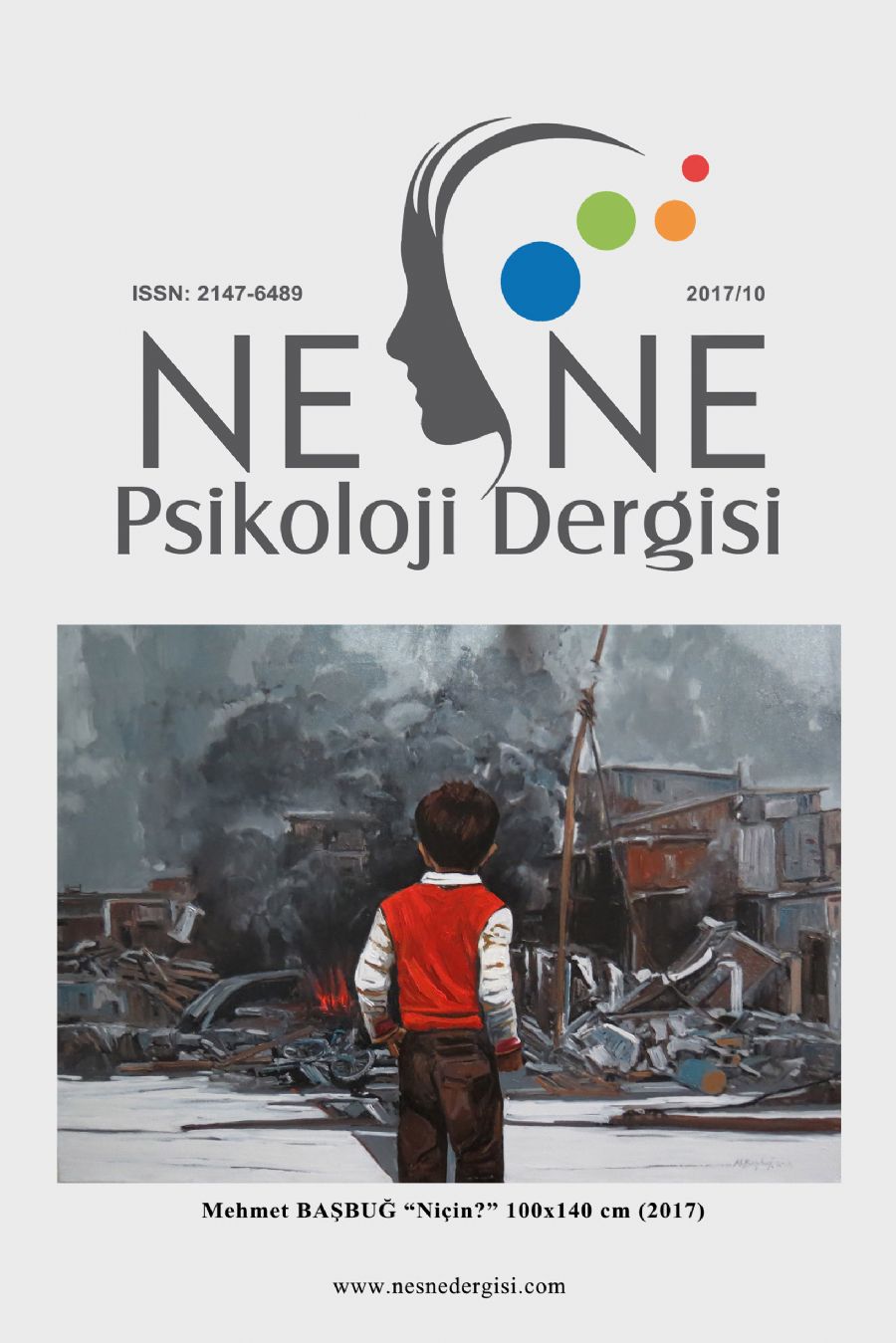
Mülteci, ülkesinde ırk, din, milliyeti, belli bir sosyal gruba mensubiyeti veya siyasi düşünceleri gibi nedenlerden ötürü baskıya uğrayan, ülke yönetimine olan güvenini kaybeden, yönetimin kendisine tarafsız davranmayacağından korkarak başka bir ülkeye sığınma başvurusunda bulunan ve geri dönmek istemeyen kişidir. Mülteci aileler çoğunlukla çocuklarının eğitimini ve geleceğini düşündükleri için ülkelerinden kaçtıklarını bildirmektedirler. Bu insanlarla ortak paydada buluşmak ve birlikte umut dolu yarınları kurmaya çaba sarf etmek, ülkemizin geleceğini korumak için çok önem arz etmektedir. Mülteci çocuklar göç öncesi, göç sırası ve göç sonrası dönemleri boyunca birbirinden farklı deneyimler yaşamaktadırlar. Göç dönemleri boyunca deneyimlenen travmatik olaylar ve yeni bir yere yerleşim süreci boyunca yaşanan stres, mülteci çocuklarda problem davranışların ve psikopatolojilerin ortaya çıkma olasılığını arttırmaktadır. Bu çalışmada ilk olarak farklı kültürlerde mülteci çocuklarla gerçekleştirilen müdahale programları incelenmiş, sonrasında da ülkemizde göç deneyimleri farklılaşan mülteci çocuklara yönelik olarak geliştirilebilecek müdahale programlarına yönelik önerilerde bulunulmuştur.
Abstract
A refugee is a person who is oppressed for such reasons as race, religion, nationality, a certain social group membership or political views in his country, who loses his trust in governance of the country, and for fear that his own state will not act impartial, seeks asylum from another country and doesn’t want to come back. Refugee families mainly report that they escaped from their countries for their children’s education and future. Meeting these people in a common ground and trying to build hopeful tomorrows together is very important to protect the future of our country. Refugee children encounter different experiences during pre-migration, migration and post-migration periods. In refugee children; traumatic events during the migration periods and the stress they are under during new settlement period, increase the likelihood of psychopathology and problem behaviors. In this study, firstly intervention programs with refugee children in different cultures were examined and then made suggestions for intervention programs that can be developed for refugee children whose immigration experiences differ in our country.
Keywords: refugee children, school-based intervention programs, psychological adjustment, acculturation
Referanslar
1543 Sayılı İskan Kanunu. (2006). T.C. Resmi Gazete, 26301, 26 Eylül 2006.
6458 Sayılı Yabancılar ve Uluslararası Koruma Kanunu. (2013). T.C. Resmi Gazete, 28615, 11 Nisan 2013.
Akesson, B., D'Amico, M., Denov, M., Khan, F., Linds, W. ve Mitchell, C. A. (2014). 'Stepping Back'as researchers: Addressing ethics in arts-based approaches to working with war-affected children in school and community settings. Educational Research for Social Change, 3(1), 75-89.
Angel, B., Hjern, A. ve Ingleby, D. (2001). Effects of war and organized violence on children: A study of Bosnian refugees in Sweden. American Journal of Orthopsychiatry, 71(1), 4-15.
Baker, C., Varma, M. ve Tanaka, C. (2001). Sticks and stones: Racism as experienced by adolescents in New Brunswick. The Canadian Journal of Nursing Research, 33(3), 87-105.
Barrett, P. M., Sonderegger, R. ve Sonderegger, N. L. (2001). Evaluation of an anxiety-prevention and positive-coping program (FRIENDS) for children and adolescents of non-English-speaking background. Behaviour Change, 18(02), 78-91.
Beauregard, C. (2014). Effects of classroom-based creative expression programmes on children's well-being. The Arts in Psychotherapy, 41(3), 269-277.
Berger, R., Pat Horenczyk, R. ve Gelkopf, M. (2007). School based intervention for prevention and treatment of elementary students' terror related distress in Israel: A quasi randomized controlled trial. Journal of Traumatic Stress, 20(4), 541-551.
Bodegård, G. (2005). Life-threatening loss of function in refugee children: Another expression of pervasive refusal syndrome? Clinical Child Psychology and Psychiatry, 10(3), 337-350.
Bronfenbrenner, U. ve Morris, P. A. (2006). The bioecological model of human development. In W. Damon & R. M. Lerner (Eds.), Handbook of child psychology, Vol. 1: Theoretical models of human development (6th ed., pp. 793-828). New York: John Wiley.
Christenson, S. L. (2004). The family-school partnership: An opportunity to promote the learning competence of all students. School Psychology Review, 33(1), 83-104.
DesMeules, M., Gold, J., Kazanjian, A. ve Manuel, D. (2004). New approaches to immigrant health assessment. Canadian Journal of Public Health, 95(3), I22-126.
Duncan, J. ve Amtson, L. (2004). Children in crisis: Good practices in evaluating psychosocial programming. Erişim tarihi: 25.01.2017, http://www.savethechildren.org/publications/Good_Practices_in_Evaluatin g_Psychosocial_Programming.pdf
Eisenbruch, M. (1988). The mental health of refugee children and their cultural development. International Migration Review, 22(2), 282-300.
Elbedour, S., Ten Bensel, R. ve Bastien, D. T. (1993). Ecological integrated model of children of war: Individual and social psychology. Child Abuse & Neglect, 17(6), 805-819.
Erdoğan, M. M. (2017). Urban refugees from detachment to harmonization syrian refugees and process management of municipalities: The case of Istanbul. Erişim Tarihi: 10.05.2017, http://fs.hacettepe.edu.tr/hugo/MMU%20Urban%20Refugees%20Report% 202017_en.pdf
Fazel, M., Doll, H. ve Stein, A. (2009). A school-based mental health intervention for refugee children: An exploratory study. Clinical Child Psychology and Psychiatry, 14(2), 297-309.
Force, R. T. T. (2005). Mental Health Interventions for Refugee Children in Resettlement. White Paper II National Child Traumatic Stress Network. Erişim Tarihi: 20.02.2017, http://www.nctsnet.org/nctsn_assets/pdfs/materials_for_applicants/MH_Int erventions_for_Refugee_Children.pdf
Garrison, E. G., Roy, I. S. ve Azar, V. (1999). Responding to the mental health needs of Latino children and families through school-based services. Clinical Psychology Review, 19(2), 199–219.
Goldstein, R. D., Wampler, N. S. ve Wise, P. H. (1997). War experiences and distress symptoms of Bosnian children. Pediatrics, 100(5), 873-878.
Gülsen, E. (2016). ‘’ Prof. Dr. Gülsen ERDEN ile Mülteci Çocuklar Üzerine’’. Söyleşiyi yapan: Sezin Başbuğ ve İbrahim Yiğit. Nesne Psikoloji Dergisi 4(8), 269-288.
Hodes, M. (2000). Psychologically distressed refugee children in the United Kingdom. Child Psychology & Psychiatry Review, 5(2), 57–68.
Howard, G. S. (1991). Culture tales: A narrative approach to thinking, cross-cultural psychology and psychotherapy. American Psychologist 46(3), 187–97.
Ingleby, D. ve Watters C. (2002). Refugee children at school: Good practices in mental health and social care. Education and Health, 20(3), 43–45.
Jensen, B. T. (2007). Understanding immigration and psychological development: A multilevel ecological approach. Journal of Immigrant & Refugee Studies, 5(4), 27-48.
Kaya, İ. ve Eren, E. Y. (2015). Türkiye’deki Suriyelilerin Hukuki Durumu. Rapor no: 50. İstanbul: SETA Yayınları. Erişim Tarihi: 10.03.2017, http://file.setav.org/Files/Pdf/20151230134459_turkiyedeki-suriyelilerin-hukuki-durumu-pdf.pdf
Kirmayer, L. J., Narasiah, L., Munoz, M., Rashid, M., Ryder, A. G., Guzder, J., ... Pottie, K. (2011). Common mental health problems in immigrants and refugees: general approach in primary care. Canadian Medical Association Journal, 183(12), 959-967.
Laroche, M. (2000). Health status and health services utilisation of Canada’s immigrant and nonimmigrant populations. Canadian Public Policy, 26(1), 51–73.
Lowry-Webster, H. M., Barrett, P. M. ve Dadds, M. R. (2001). A universal prevention trial of anxiety and depressive symptomatology in childhood: Preliminary data from an Australian study. Behaviour Change, 18(01), 36- 50.
Lynch, E. W. ve Stein, R. C. (1987). Parent participation by ethnicity: A comparison of Hispanic, Black, and Anglo families. Exceptional Children, 54(2), 105- 111.
MacDermid Wadsworth, S. M. (2010). Family risk and resilience in the context of war and terrorism. Journal of Marriage and Family, 72(3), 537-556.
McEvoy, A. ve Welker, R. (2000). Antisocial behavior, academic failure, and school climate a critical review. Journal of Emotional and Behavioral Disorders, 8(3), 130-140.
MEB. (2015). MEB Stratejik Plan (2015-2019). http://sgb.meb.gov.tr/meb_iys_do syalar/2015_09/10052958_10.09.2015sp17.15imzasz.pdf
Miller, K. E. ve Billings, D. L. (1994). Playing to grow: a primary mental health intervention with Guatemalan refugee children. American Journal of Orthopsychiatry, 64(3), 346–56.
Momartin, S., Silove, D., Manicavasagar, V. ve Steel, Z. (2003). Dimensions of trauma associated with posttraumatic stress disorder (PTSD) caseness, severity and functional impairment: A study of Bosnian refugees resettled in Australia. Social Science & Medicine, 57(5), 775-781.
Mültecilerin Hukuki Statüsüne İlişkin Sözleşme. (2016). Erişim Tarihi: 10.05.2017, http://www.multeci.org.tr/wp-content/uploads/2016/12/1951-Cenevre-Sozlesmesi-1.pdf
Papageorgiou, V., Frangou-Garunovic, A., Lordanidou, R., Yule, W., Smith, P. ve Vostanis, P. (2000). War trauma and psychopathology in Bosnian refugee children. European Child & Adolescent Psychiatry, 9(2), 84-90.
Pope, A. W., McHale, S. M. ve Craighead, W. E. (1988). Self-Esteem Enhancement with Children and Adolescents. New York: Pergamon Press.
Porter, M. ve Haslam, N. (2005). Predisplacement and postdisplacement factors associated with mental health of refugees and internally displaced persons: A meta-analysis. Jama, 294(5), 602-612.
Qin, D. B. (2008). Doing well vs. feeling well: Understanding family dynamics and the psychological adjustment of Chinese immigrant adolescents. Journal of Youth and Adolescence, 37(1), 22-35.
Rosenthal, D. A. ve Feldman, S. S. (1990). The acculturation of Chinese immigrants: Perceived effects on family functioning of length of residence in two cultural contexts. The Journal of Genetic Psychology, 151(4), 495- 514.
Rousseau, C., Beauregard, C., Daignault, K., Petrakos, H., Thombs, B. D., Steele, R., … Hetcham, L. (2014). A cluster randomized-controlled trial of a classroom-based drama workshop program to improve mental health outcomes among immigrant and refugee youth in special classes. PloS One, 9(8), 1-9.
Rousseau, C., Benoit, M., Gauthier, M. F., Lacroix, L., Alain, N., Rojas, M. V., … Bourassa, D. (2007). Classroom drama therapy program for immigrant and refugee adolescents: A pilot study. Clinical Child Psychology and Psychiatry, 12(3), 451-465.
Rousseau, C. ve Drapeau, A. (2004). Premigration exposure to political violence among independent immigrants and its association with emotional distress. The Journal of Nervous and Mental Disease, 192(12), 852–856.
Rousseau, C., Drapeau, A. ve Corin, E. (1996). School performance and emotional problems in refugee children. American Journal of Orthopsychiatry, 66(2), 239–51.
Rousseau, C., Drapeau, A., Lacroix, L., Bagilishya, D. ve Heusch, N. (2005). Evaluation of a classroom program of creative expression workshops for refugee and immigrant children. Journal of Child Psychology and Psychiatry,46(2), 180-185.
Rousseau, C. ve Guzder, J. (2008). School-based prevention programs for refugee children. Child and Adolescent Psychiatric Clinics of North America,17(3), 533-549.
Rousseau, C., Lacroix, L., Bagilishya, D. ve Heusch, N. (2003). Working with myths: Creative expression workshops for immigrant and refugee children in a school setting. Art Therapy, 20(1), 3-10.
Rousseau, C., Singh, A., Lacroix, L., Measham, T. ve Jellinek, M. S. (2004). Creative expression workshops for immigrant and refugee children. Journal of the American Academy of Child & Adolescent Psychiatry, 43(2), 235- 238.
Rowe, C., Watson-Ormond, R., English, L., Rubesin, H., Marshall, A., Linton, K. ve arkadaşları. (2016). Evaluating Art Therapy to heal the effects of trauma among refugee youth: The Burma Art Therapy Program evaluation. Health Promotion Practice, 18(1), 26-33.
Sleeter, C. E. (2001). Preparing teachers for culturally diverse schools: Research and the overwhelming presence of whiteness. Journal of Teacher Education 52(2), 94–106.
Stewart, J. (2012). Transforming schools and strengthening leadership to support the educational and psychosocial needs of war-affected children living in Canada. Diaspora, Indigenous, and Minority Education, 6(3), 172-189.
Sullivan, A. L. ve Simonson, G. R. (2016). A systematic review of school-based social-emotional interventions for refugee and war-traumatized youth. Review of Educational Research, 86(2), 503-530.
Taylor, S. ve Sidhu, R. K. (2012). Supporting refugee students in schools: What constitutes inclusive education?. International Journal of Inclusive Education, 16(1), 39-56.
Tolfree, D. (1996). Restoring playfulness-different approaches to assisting children who are psychologically affected by war or displacement. Stockholm: Falun Radda Barnen.
UNHCR. (2002). Refugees by numbers, Erişim Tarihi: 10.04.2017. http://www.unhcr.ch
UNICEF. (2016). Türkiye’deki Suriyeli çocuklar, Erişim Tarihi: 10.05.2017, http://unicef.org.tr/files/bilgimerkezi/doc/T%C3%BCrkiyedeki%20Suriyeli %20%C3%87ocuklar_Bilgi%20Notu%20Nisan%202016_1.pdf
van Westrhenen, N. ve Fritz, E. (2014). Creative arts therapy as treatment for child trauma: An overview. The Arts in Psychotherapy, 41(5), 527-534.
Wethington, H. R., Hahn, R. A., Fuqua-Whitley, D. S., Sipe, T. A., Crosby, A. E., Johnson, R. L. ve arkadaşları. (2008). The effectiveness of interventions to reduce psychological harm from traumatic events among children and adolescents: A systematic review. American Journal of Preventive Medicine, 35(3), 287-313.
Williams, J. H. (2001). On school quality and attainment. In J. Crisp., C. Talbot & D. B. Cipollone (Eds.), Learning for a Future: Refugee Education in Developing Countries (pp. 86-162). Geneva: United Nations Publications.
Yohani, S. C. (2008). Creating an ecology of hope: Arts-based interventions with refugee children. Child and Adolescent Social Work Journal, 25(4), 309-

Bu çalışma Creative Commons Attribution-NonCommercial-NoDerivatives 4.0 International License ile lisanslanmıştır.
Telif Hakkı (c) 2017 Nesne Psikoloji Dergisi